One room stays hot
The branch, return path, room load, or duct leakage may be limiting delivered comfort.

Ductwork & airflow · San Antonio
A hot room or weak vent does not automatically mean you need a bigger system or all-new ducts. Arthur follows the complete air path, measures where appropriate, and explains the smallest correction supported by the evidence.
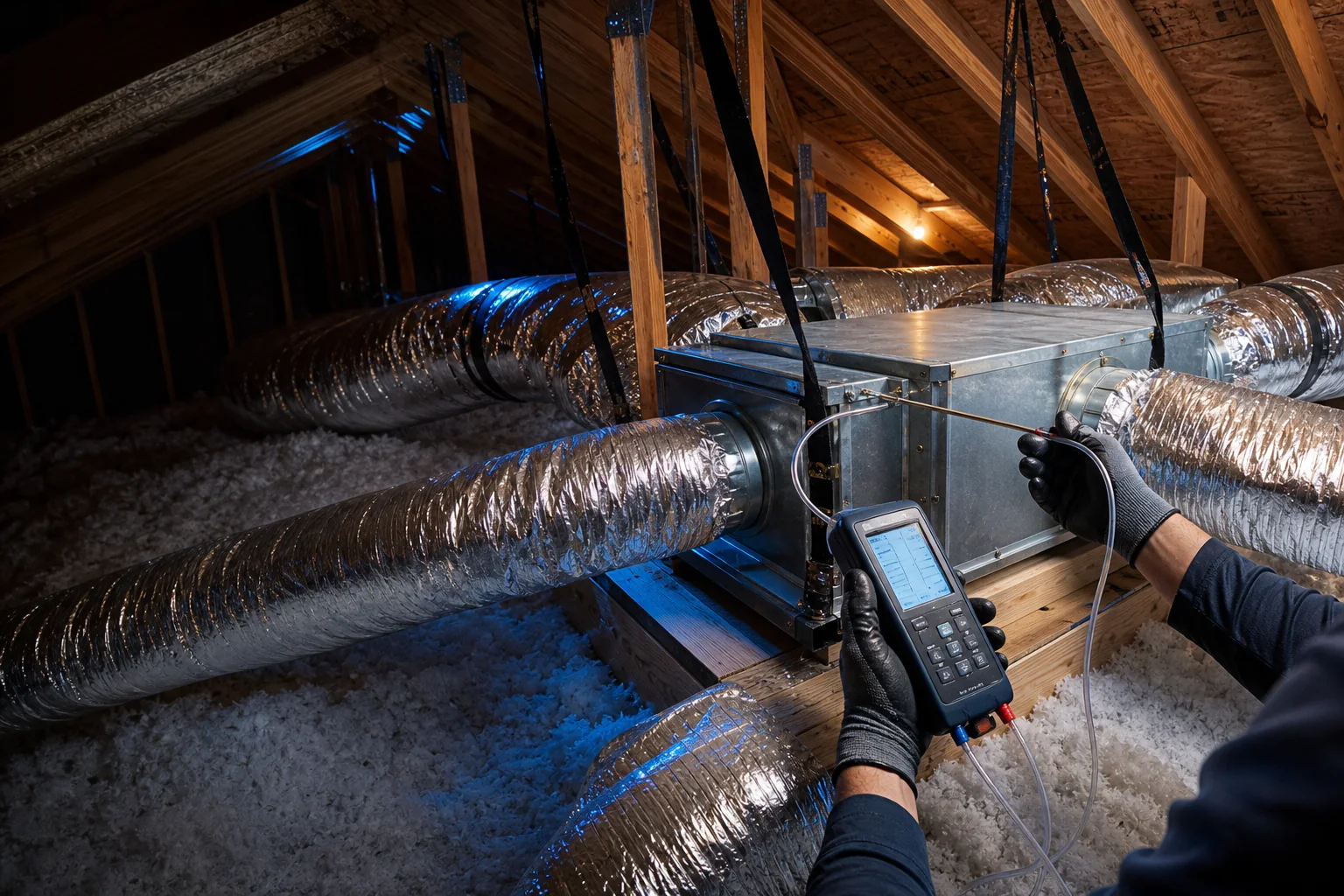
One-system starting point · written findings included
When to look deeper
These symptoms justify an airflow evaluation, but none of them proves the ductwork is the cause. The goal is to separate duct, equipment, control, and room-load problems.
The branch, return path, room load, or duct leakage may be limiting delivered comfort.
A filter, coil, blower, return, transition, or duct restriction can reduce total airflow.
Whistling and filter distortion can point to excessive return-side resistance.
Capacity may be getting lost through leakage, poor distribution, or high room load.
A closed bedroom may not have a practical path for air to return to the system.
A new system cannot correct every undersized, restrictive, or unbalanced duct layout.
One comfort system
Treating every hot room as a “duct problem” skips the measurements that make the recommendation trustworthy.
Filter, blower, coil, controls, accessories, and the indoor unit must move the manufacturer-required air volume.
Supply and return sizes, fittings, flex compression, leakage, and layout determine how much resistance the blower sees.
Each room needs the right supply amount and a workable return path—especially with the door closed.
Solar exposure, windows, insulation, air leakage, and remodeling can overpower otherwise reasonable airflow.
The evaluation
The exact test scope depends on access, equipment, and the approved diagnostic, but every visit begins by defining the actual comfort complaint.
Arthur starts with which rooms are uncomfortable, when it happens, and what changed.
Filter, blower setup, coil condition, registers, dampers, and obvious equipment faults are reviewed.
Static pressure and component pressure drops may be checked where appropriate and accessible.
Accessible plenums, branches, supports, insulation, connections, and return paths are examined.
The findings distinguish equipment, duct, room-distribution, leakage, and building-load problems.
You receive practical options, expected results, exclusions, and a written scope before work begins.
Planning prices
These are early planning numbers for ordinary San Antonio conditions—not guaranteed quotes. Arthur confirms access, testing, materials, design, returns, and exclusions before pricing the work.
$149
One-system starting point
$250–$700
Typical planning range
From $475
For serviceable adjustable systems
$750–$1,500
Typical planning range
$900–$2,500+
Project planning range
$3,500–$7,500+
Common planning range
Market basis reviewed July 2026. Public San Antonio references commonly publish targeted repair near $150–$700, sealing near $500–$1,500, and complete replacement near $3,000–$7,000, with complex projects reaching $12,000 or more.
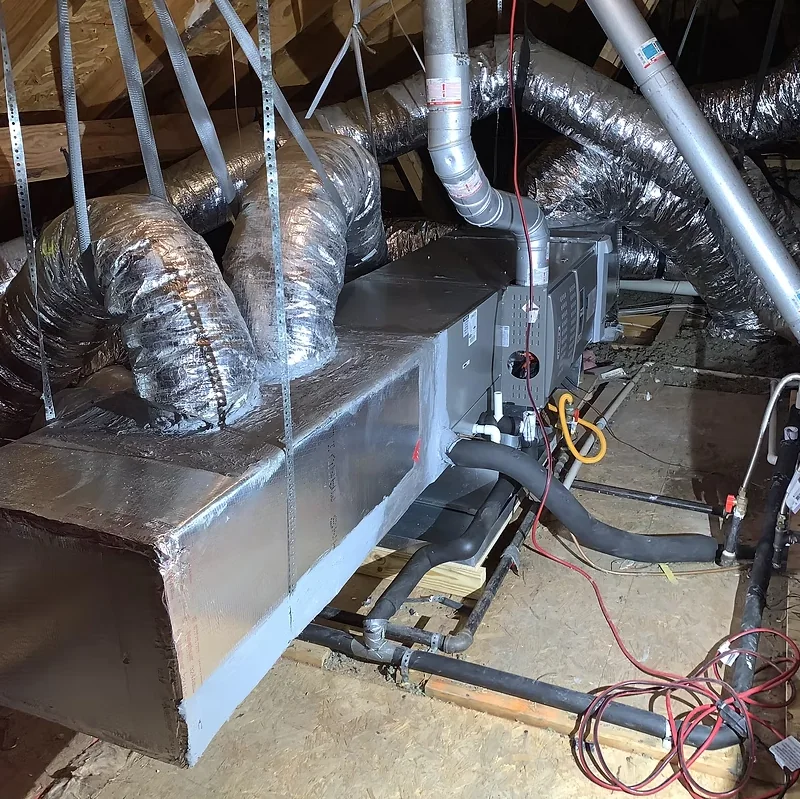
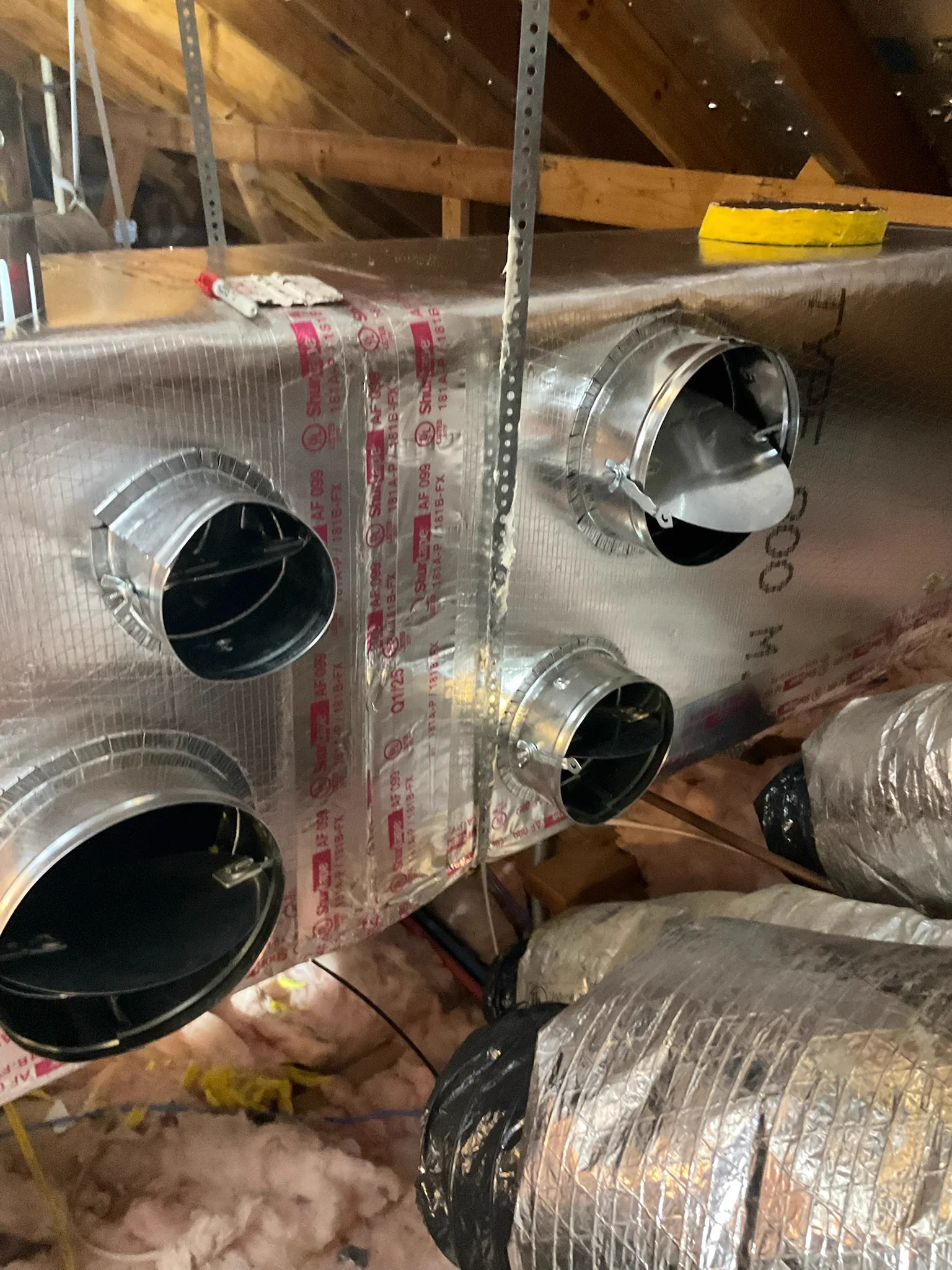
Air Valentine ductwork
Plenums, takeoffs, dampers, flex routing, supports, insulation, and return paths all affect how the equipment performs.
The correction ladder
Complete replacement is reserved for broad deterioration or a design that cannot be corrected economically.
Project scope checklist
Air Valentine’s written scope identifies the installed work, verification, conditions, and exclusions so unlike proposals can be compared honestly.
Request a written scopeA useful distinction
Diagnosis finds why air is not moving or reaching a room. Balancing changes distribution. Sealing reduces leakage. Repair corrects damage. Cleaning removes qualifying contamination. Air Valentine does not sell routine cleaning as the automatic answer to weak airflow.
Air Valentine answers
Follow the supply, return, leakage, solar-load, insulation, and room-pressure clues before assuming the AC is undersized.
Frequently asked questions
Possible causes include low supply airflow, a crushed or undersized duct, leakage, a closed damper, an inadequate return path, excess solar load, poor insulation, building air leakage, or a room load that exceeds the duct’s delivery. A useful evaluation checks both the air system and the room.
No. Weak airflow can come from a restrictive filter, dirty coil, blower problem, incorrect setup, closed damper, crushed run, leakage, undersized return, or duct design. Replacement makes sense only when repair or modification cannot reasonably correct the condition.
Static pressure is part of the resistance the blower works against. The reading must be interpreted with the equipment manufacturer’s data and, when needed, component pressure drops. A high number identifies excessive resistance but does not identify the cause by itself.
It can improve delivered airflow when conditioned air is escaping through leaks. Sealing does not correct ducts that are too small, badly compressed, poorly routed, or allocated to the wrong rooms.
No. Cleaning removes qualifying contamination. Airflow diagnosis, balancing, sealing, repair, modification, and replacement solve different problems. Air Valentine does not treat routine duct cleaning as the default answer to weak airflow.
Public local references commonly place targeted repair around $150–$700, whole-home sealing around $500–$1,500, and full replacement commonly around $3,000–$7,000. Air Valentine’s displayed ranges are planning guides; access, design, testing, materials, returns, permits, and finish work determine the written price.
Start with the air path
Tell Arthur which rooms feel wrong, when it happens, and whether anything changed. Air Valentine will take it from there.