Essential Comfort
$8,250–$10,750
Local benchmark: $8,500–$11,000
A practical standard-efficiency central replacement under ordinary installation conditions.
- Matched central system
- Single-stage operation
- Standard controls
- Complete commissioning

HVAC replacement · San Antonio
Air Valentine helps you compare complete-system options, understand the installation work behind each price, and choose the comfort level that makes practical sense for your home.
Air Valentine’s temporary Essential and Enhanced ranges. Final price follows equipment selection and a written installation scope.
Competitive planning prices
These temporary Air Valentine bands are positioned just below current public San Antonio planning ranges while preserving a complete, code-aware installation scope.
Planning ranges—not quotes. Capacity, efficiency, equipment type, electrical requirements, gas and venting conditions, airflow, access, permits, controls, and corrections can move a project outside these bands. Last benchmarked July 26, 2026.
$8,250–$10,750
Local benchmark: $8,500–$11,000
A practical standard-efficiency central replacement under ordinary installation conditions.
$10,750–$13,750
Local benchmark: $11,000–$14,000
Higher efficiency, upgraded blower or controls, two-stage operation, or additional installation work.
$13,750–$17,750+
Local benchmark: $14,000–$18,000+
Variable-capacity or premium equipment, advanced controls, larger capacity, or complex project conditions.
$2,950–$7,250 per zone
Local benchmark: $3,000–$7,500 per zone
A single-zone mini-split for an addition, garage, casita, shop, or room without practical duct access.
The benchmark compares publicly posted local ranges; companies may include different equipment and installation work. Air Valentine’s written proposal controls—not the chart. Financing, if offered, is subject to current provider approval and terms.
The scope checklist
A lower equipment number is not a better value when required labor, permits, transitions, controls, or commissioning are left for later. Every proposal should identify included, additional, and not-required items.
Read the quote checklistWhy ranges move
Capacity must match the home’s actual cooling and heating load—not simply the old equipment label or square footage.
Single-stage, two-stage, variable-capacity, blower type, heat-pump configuration, and controls change equipment cost.
Return size, supply restrictions, static pressure, duct leakage, and room balance can require additional scope.
Disconnects, breakers, feeders, gas connections, venting, and code corrections are evaluated separately.
Tight attics, platforms, plenums, rooftops, cranes, and concealed conditions can move a project beyond the chart.
Zoning, filtration, indoor air quality, dehumidification, smart controls, and insulation are selected independently.
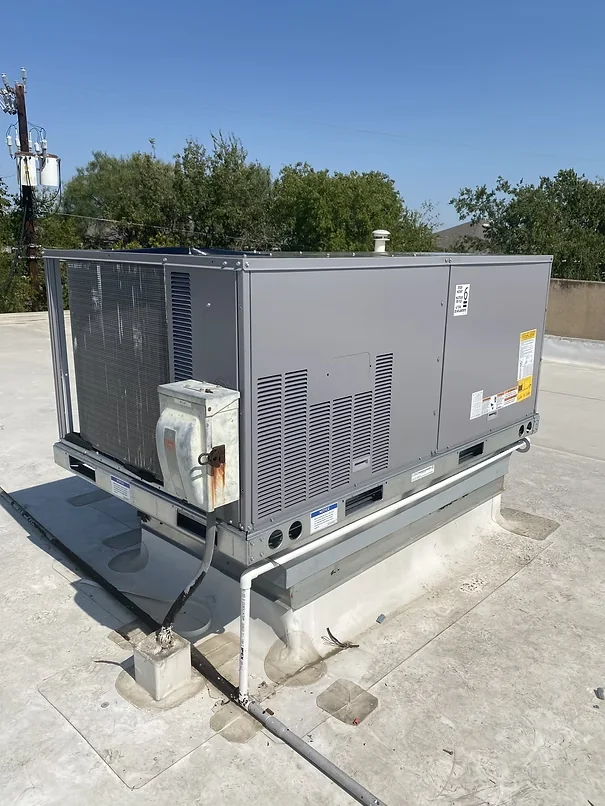
Real Air Valentine work
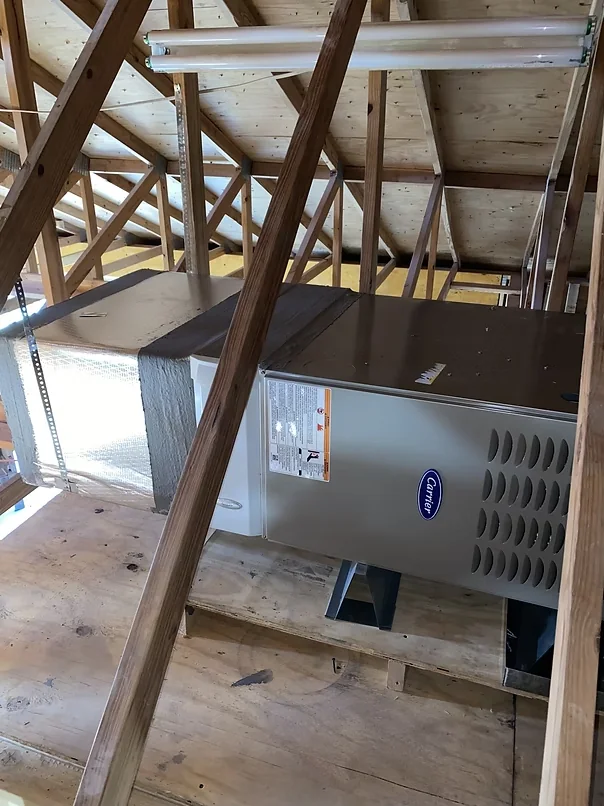
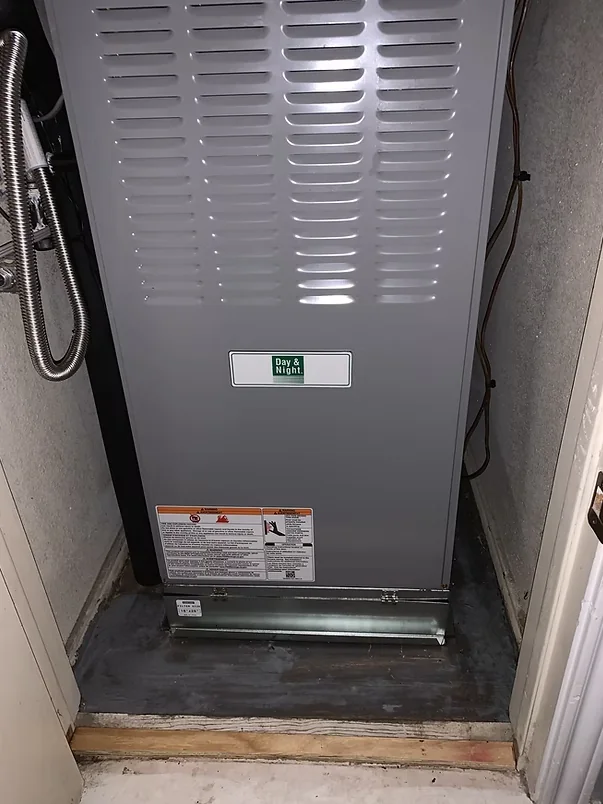
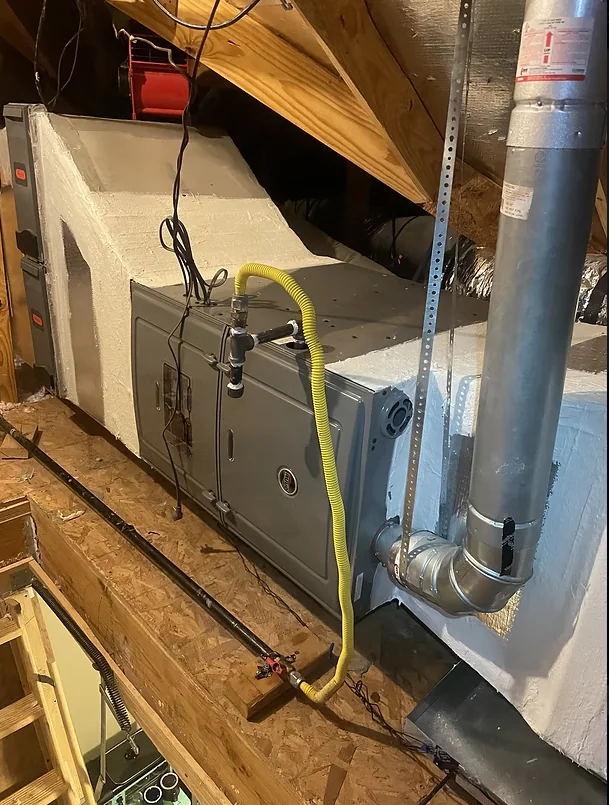
The equipment label changes from project to project. The focus stays on secure placement, serviceable connections, airflow, drainage, controls, and final operation.
CPS Energy incentives
Published CPS Energy HVAC materials have listed central AC and heat-pump rebates from $90 to $310 per cooling ton, depending on efficiency and project type. Program rules and funding can change, so eligibility is confirmed against current requirements rather than subtracted from the advertised range.
Check current CPS Energy programs ↗| Typical size | Public installed range | Comparison context |
|---|---|---|
| 1.5–2 tons | $5,500–$9,500 | Small-home standard central systems |
| 2–2.5 tons | $6,500–$9,500 | Published examples around 1,000–1,500 sq. ft. |
| 2.5–3 tons | $7,500–$12,000 | Common San Antonio full-system category |
| 3–3.5 tons | $8,500–$12,000 | Larger common-home category |
| 3.5–4 tons | $11,000–$14,500 | Larger capacity or additional scope |
| 4–5 tons | $13,000–$18,000+ | Large home, higher capacity, or premium equipment |
Sizing warning: square footage and existing tonnage do not independently determine the correct system size. This chart compares published prices; it is not a sizing tool.
Air Valentine answers
Use the homeowner checklist to compare equipment, permits, refrigerant lines, electrical work, drainage, airflow, commissioning, warranties, exclusions, and total price.
Replacement questions
Current public San Antonio planning ranges commonly place standard central replacements around $8,500–$11,000, upgraded systems around $11,000–$14,000, and premium or variable systems around $14,000–$18,000 or more. Air Valentine’s temporary planning bands are shown slightly below those benchmarks, but your written proposal depends on the actual equipment and scope.
No. They are planning ranges for early comparison. A quote requires reviewing capacity, equipment type, electrical and gas conditions, airflow, drainage, access, permits, controls, and the installation work required for the specific home.
The central-system planning ranges assume a complete matched replacement with the quoted outdoor unit, indoor coil, and furnace or air handler. The written proposal identifies every included component so an outdoor-unit-only price is not mistaken for a complete system.
Only when their size, condition, routing, and compatibility support the selected equipment and the approved preparation method. The proposal should state whether the line set is replaced, prepared for reuse, or requires additional work.
Minor equipment transitions may be part of the standard scope. Whole-home duct replacement, major return corrections, balancing changes, or concealed duct damage are evaluated and quoted separately so the project remains transparent.
Possibly. Eligibility depends on current program funding and rules, matched-equipment efficiency, AHRI documentation, project type, contractor licensing, permits, and other requirements. A rebate should not be treated as guaranteed until eligibility is confirmed.
Request a replacement estimate
Tell Arthur what you want to improve, what the current system is doing, and the best way to reach you.